
Mauzaïc project
When genetic diversity helps the winemaker
The Mauzac, an emblem in Limoux
If you have tasted some Blanquette de Limoux, you already know the Mauzac. Historical grape variety in Limoux, it is mainly used to make this sparkling.
Neglected for a time, because it was considered as too rustic, it shows today an interesting tolerance face with climate change.
Could this historical variety therefore be innovative?
Let’s not get ahead of ourselves…
A low diversity used
Even if the Mauzac is an old grape variety, only 7 clones of Mauzac Blanc and a single clone of Mauzac Rose are officially agreed in France. Worse, only two clones are planted in Limoux, the two more adapted to produce sparkling wines.
Though, a conservatory of Mauzac exists, located in Limoux and Gaillac, gathering no fewer than clones of Mauzac!!
…2 in 211… less than 1% of the available diversity is planted in Limoux…
The Mauzaïc project was born out of this awareness. We decided to rebuild the genetic diversity of the Mauzac, in order to investigate all the possibilities offered by this mysterious variety.
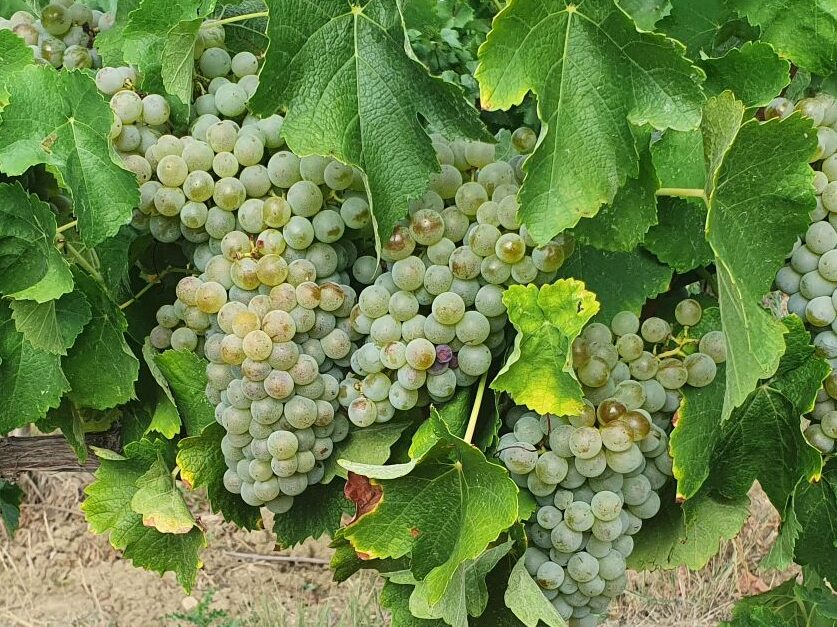
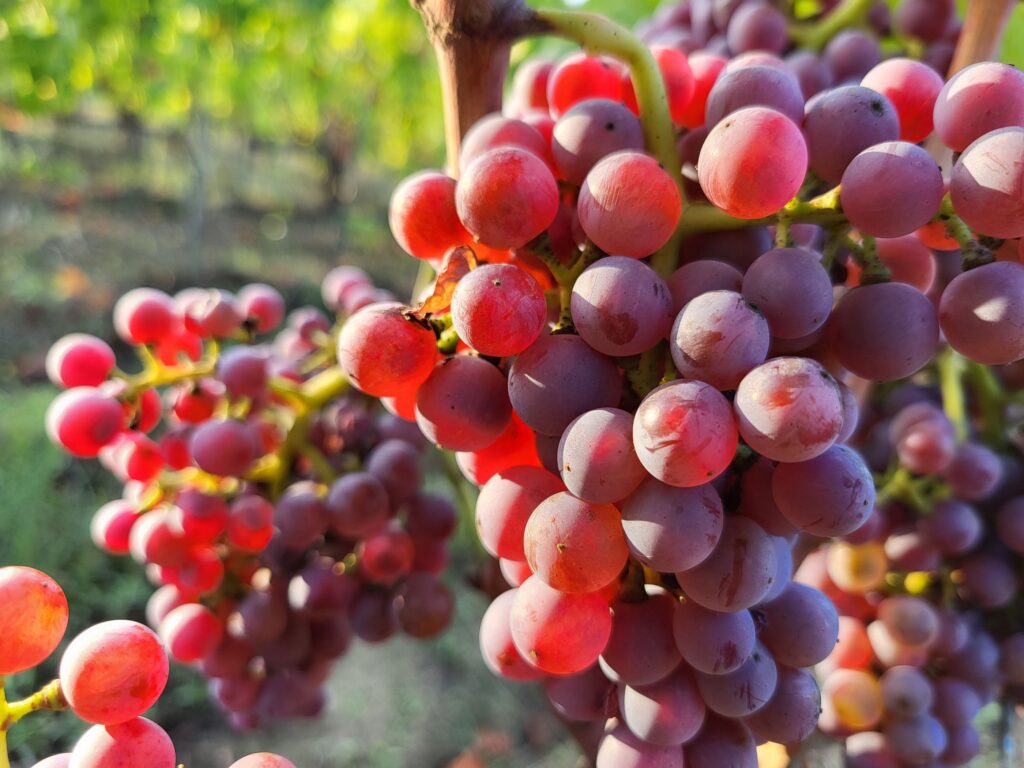
Genetic diversity: ally or enemy?
However, care must be taken: diversity can sometimes be tricky. In the 70s, the passage from mass selection to clonal selection allowed a better control of the yields, and also to avoid some plant health problems. Some plant pathogens like the grapevine fanleaf virus or the Grapevine leafroll-associated virus were then limited.
Our return to a certain genetic diversity must not be to the detriment of the health of the vineyard.
In this way, the conservatory is very useful. Each clone was thoroughly monitored by the Chambre d’Agriculture. We thus removed the clones particularly sensitive to coulure, those showing some lack of vigour, or those potentially carrier of viroses.
So, in the 211 clones of Mauzac in the conservatory of Limoux, we kept “only” 187 clones.
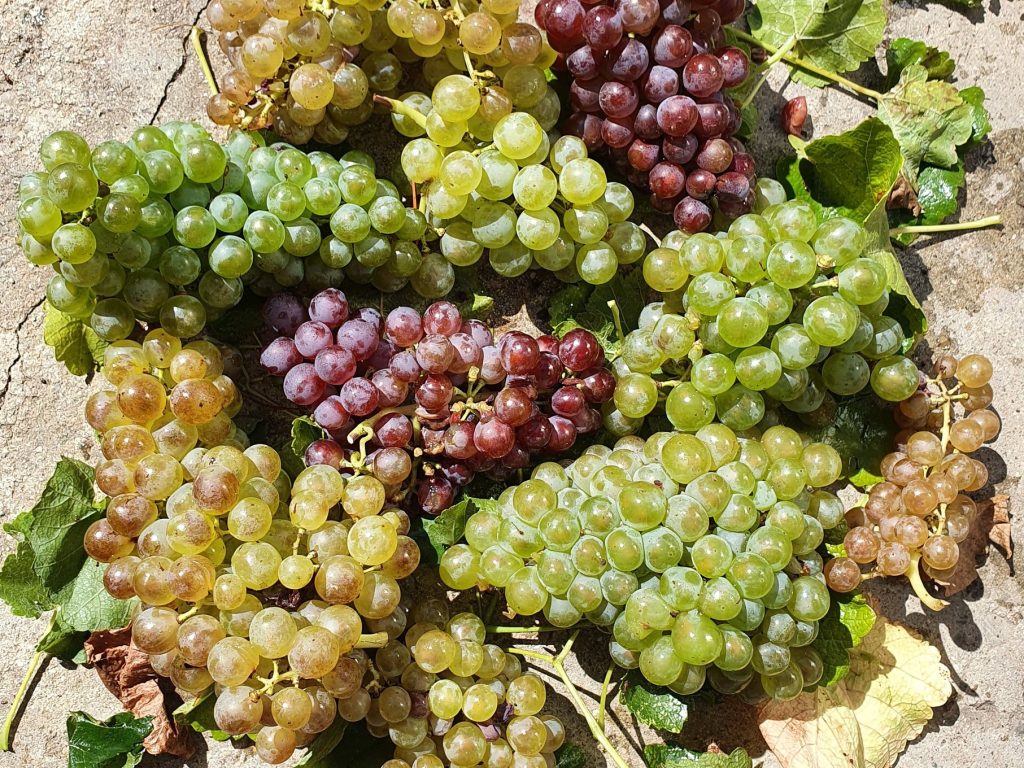
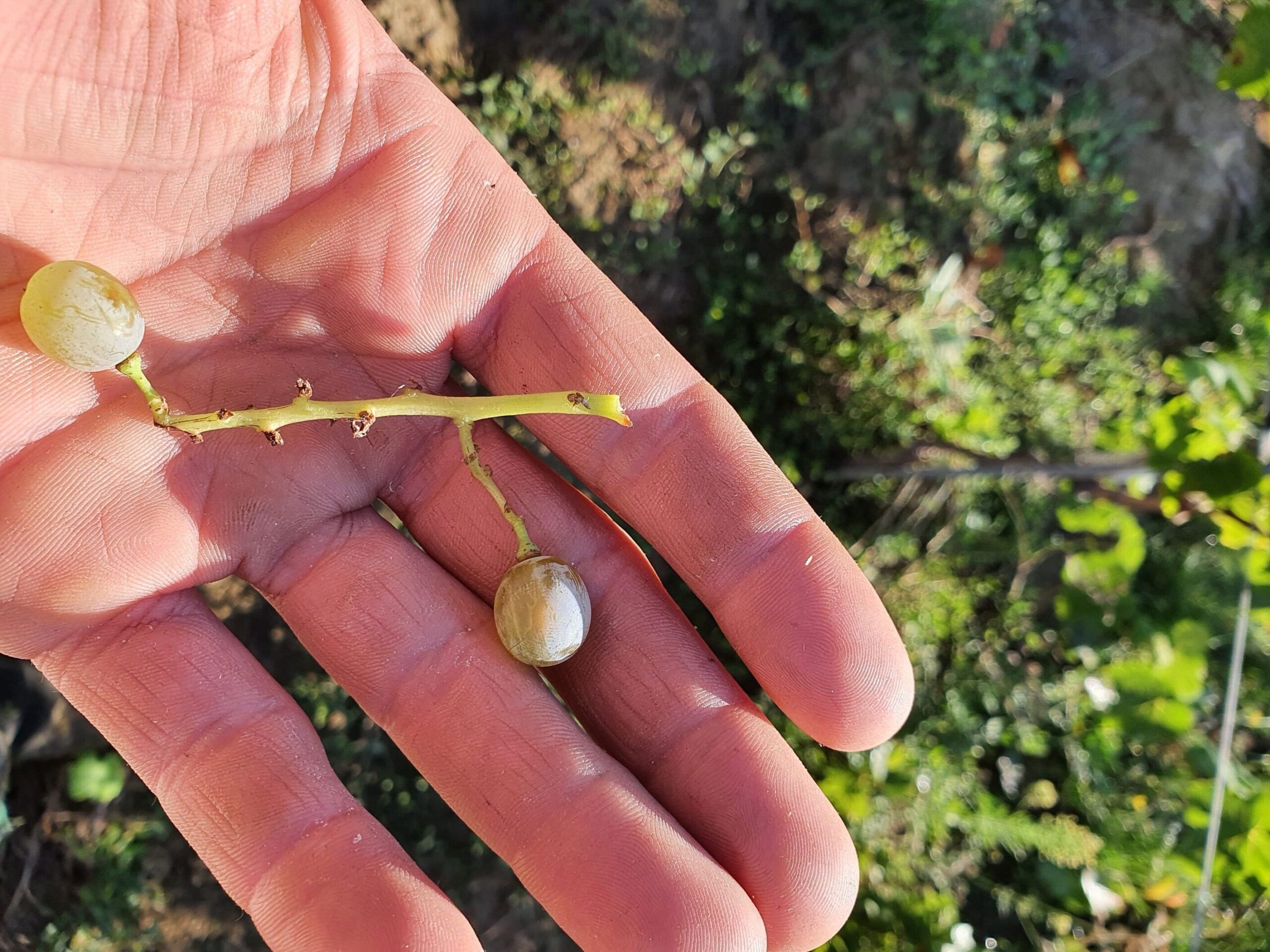
One plot, 187 clones
One plot of half an hectare was chosen for the plantation, located in Roquetaillade (hamlet of “Aiguecaud”), on a south exposed slope. We wanted to distribute the clones in the plot while being able to identify each individual. An impossible task for a small estate like our! We then had to make some choice to save time:
– 45 clones of Mauzac Blanc, originated from the Limoux area are identified and labelled, on a delimited zone ;
– 99 clones of Mauzac Blanc originated from the Gaillac area are randomly mixed, on a delimited zone ;
– 43 clones of Mauzac Rose originated from the Gaillac area are randomly mixed, on a delimited zone.
We also worked with 4 different root-stocks : RSB1, 101-14 MGt, Fercal, Riparia.
The field grafting: a patrimonial gesture
3 750 vines, from a combination of 4 root-stocks and 187 clones of Mauzac… A nightmare for any nurseryman! We took advantage of this project to reclaim an old gesture now mastered by only a few vine growers: the field grafting.
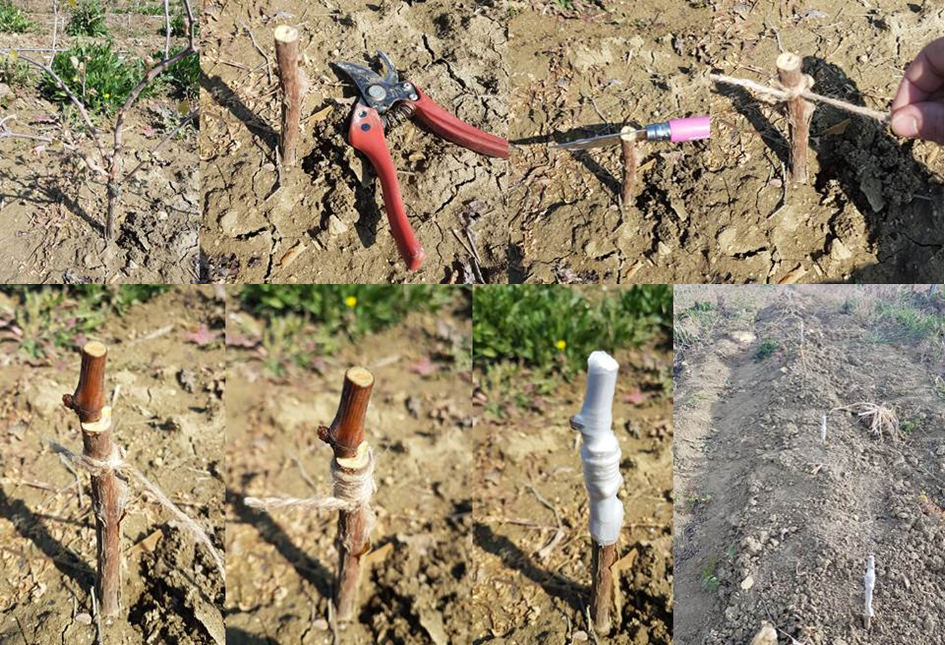
The field grafting consists in planting the root-stock, then grafting it directly “in the field” at least the next year, when it has grown enough.
We practiced cleft grafting, because it was already used by Pierre and his father before. We make a cleft in the root-stock with a knife. We then insert the graft, cut in a bevel shape, taking care to adjust the two les cambiums entre eux (c’est ce qui permettra une continuité de la sève entre le porte-greffe et le greffon). Une ficelle biodégradable entoure le point de greffage afin d’assurer le maintient du couple.
Le point de greffe doit alors être maintenu à une certaine humidité afin que la greffe prenne. Historiquement, la greffe était pratiquée assez basse, et une butte de terre fine recouvrait l’ensemble afin de le protéger. Nous avons plutôt utilisé un ruban souple de paraffine qui vient entourer le point de greffe. Cela nous permet de greffer plus haut sur le porte greffe : en cas d’infection par une maladie du bois, nous pourrons alors regreffer plus bas sans remplacer le plant dans son intégralité.
La gamme de vins “Mauzaïc”
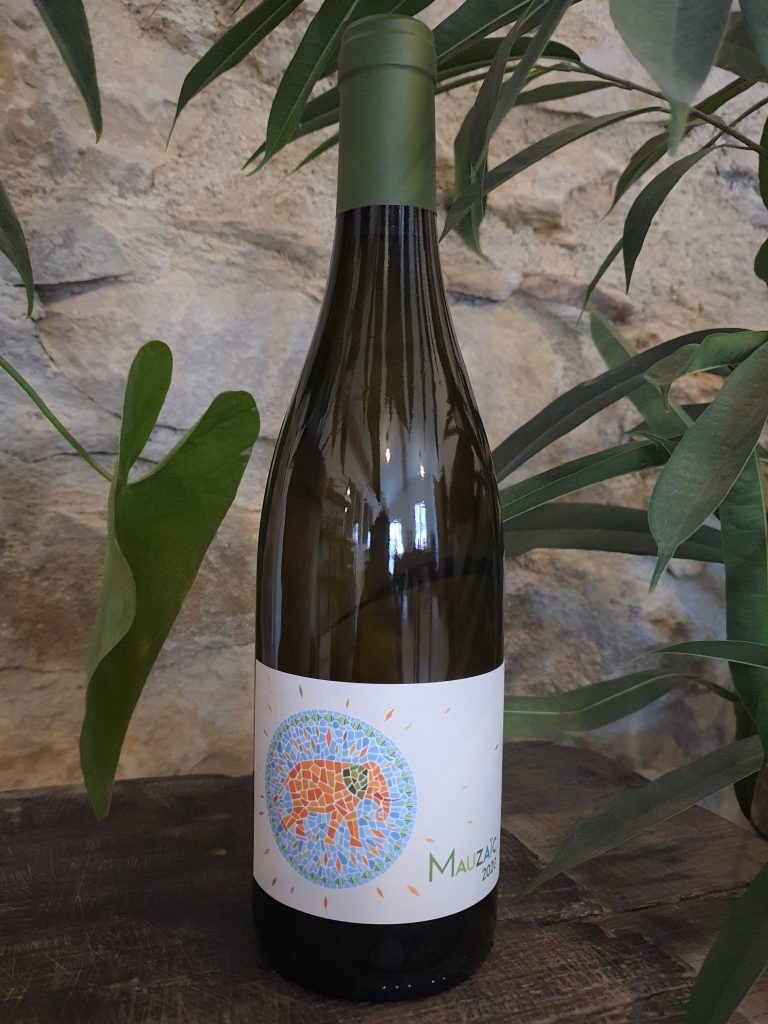
Aujourd’hui, deux vins de Mouscaillo sont issus de notre travail autour du Mauzac :
– Limoux Blanc, cuvée Mauzaïc
– Mauzac sous Voile
Deux visions du Mauzac très atypiques. L’une cherche a mettre en avant l’expression la plus pure du cépage sur notre terroir de Roquetaillade, avec une vinification la moins intrusive possible. A l’inverse, la seconde est issue d’un élevage extrême de 7 ans, en milieu oxydatif.
Plus d’informations sur la page Les Vins.
D’autres projets sont en préparation autour du Mauzac, notamment une eau de vie. Encore un peu de patience…
Historique
Années 2017-2018 – Préparation de la parcelle.
Mars 2018 – Plantation des porte-greffes.
Février 2019 – Récolte des bois de Mauzac au conservatoire. Stockage en conditions contrôlées.
Avril 2019 – Greffage en place du Mauzac sur les porte-greffes déjà développés.
Printemps 2020 – Formation des plants en Cordon de Royat.
Septembre 2020 – Première récolte.
Projet Mauzaïc – Fiche Technique
Caractéristiques |
Parcelle Mauzaïc |
|---|---|
Surface |
50 ares |
Terroir |
Roquetaillade, Lieu dit Aiguecaud |
Densité de plantation |
7500 pieds/ha |
Âge |
Plantation des porte-greffes en 2018 |
Cépages |
Mauzac Blanc et Mauzac Rose |
Clones sélectionnés |
– 45 clones Blancs, originaires de Limoux, identifiés |
Portes greffes |
4 Porte-greffes différents (RSB1, 101 14, FERCAL, RIPARIA) |
Greffage |
Greffage en place à partir de 2019 |
Bibliographie, pour aller plus loin :
Sélection Clonale / massale :
https://www.vignevin.com/innovation-varietale/selection-clonale/
Différentes maladies de la vigne :
https://ephytia.inra.fr/fr/C/6047/Vigne-Les-maladies-et-ravageurs